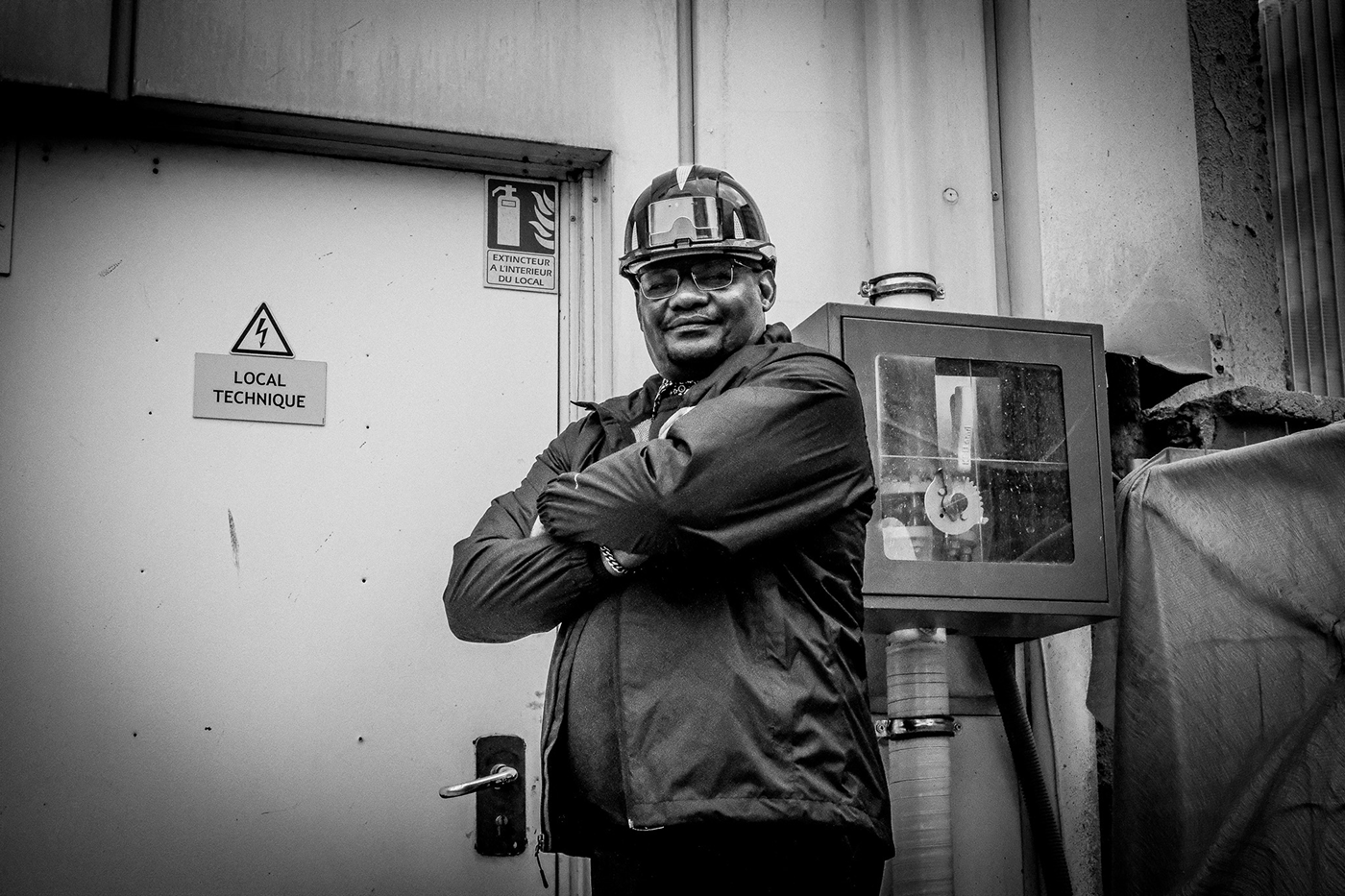
AliElectrician
Chez asap.work depuis
April 2024
From crossing the desert to achieving excellence in electrical engineering, Ali overcame every obstacle to light up his future, driven by pride in his profession and his dignity.
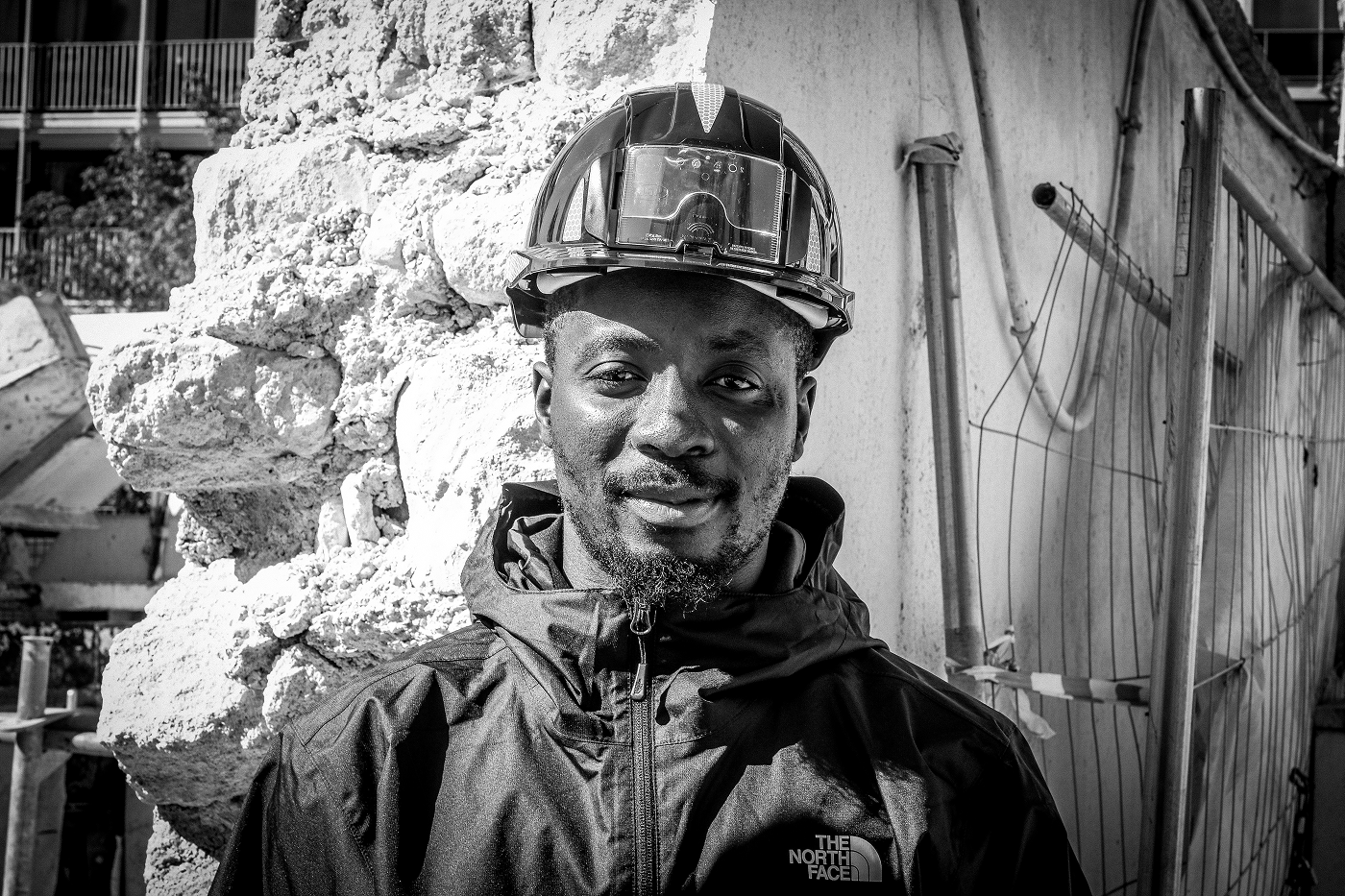
At 16, I crossed the desert and the sea alone: this ordeal gave me the strength to never give up in the face of real-world challenges.
Originally from Ivory Coast, Ali envisioned himself as a professional footballer. He ultimately found his path and independence in electrical networks. From crossing the Mediterranean at 16 to wiring major Parisian commercial projects, he shares an inspiring account of the power of resilience.
Ali started in electricity young, at 16, right after arriving in France. Under the wing of "Chef Mike," a protective mentor who passed on the secrets of the trade, he cut his teeth on the Saint-Germain swimming pool construction site. Later confronted with everyday racism in his first permanent contract, he refused to bow down and walked out: he then restarted in temporary work and proved his worth on the job. Today, as an accomplished commercial electrician, he manages the complexity of wiring networks and the precision of finishes, all while maintaining immense pride in his journey. His greatest victories? Having lit up the UBS bank in the 8th arrondissement or the Créteil laboratory, and being able to say today that he has found his place and his true professional family.
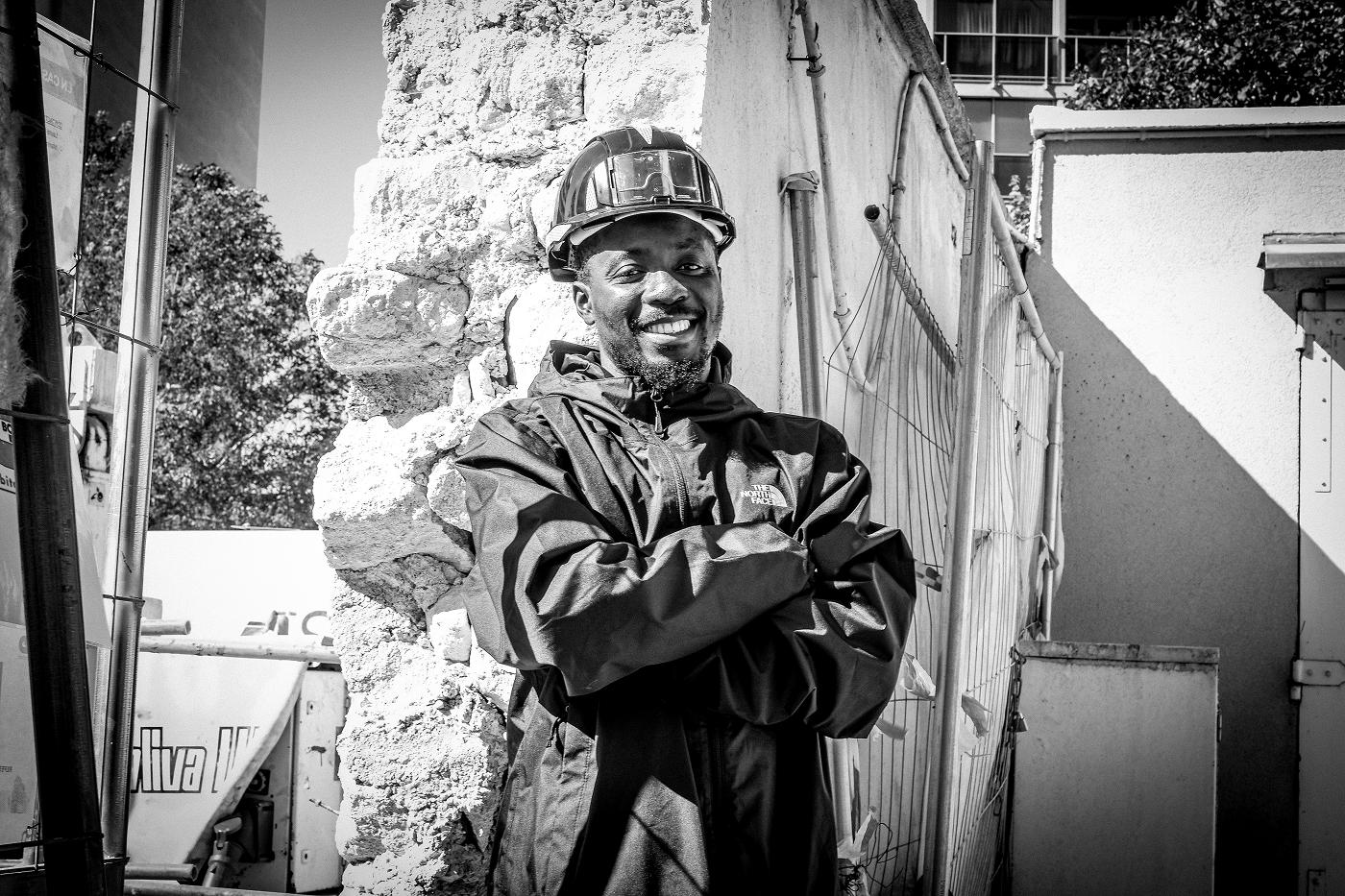
The most important thing on a construction site is mutual respect. I proved my worth through my work, and I will never accept anyone trampling on my dignity.

His look at theFuture of the profession and the place of young people in the sector

Sa pride to work on projects that shape the daily lives of Ile-de-France residents

Les technical challenges which he was confronted with.

Son rangelands and his first steps in the construction industry
In this interview, Ali reflects on:
- His courageous exile at 16, leaving Ivory Coast on his birthday to cross the desert and the sea, trading his initial dream of becoming a professional footballer for a future to build in France.
- The turning point with the guidance center and his training, which guided him towards electricity, leading him from work-study apprenticeship to creating his own micro-business to test the waters of entrepreneurship.
- His absolute demand for respect, which led him to leave a permanent contract to refuse the everyday racism of some colleagues, preferring the freedom and fair recognition he later found at asap.work.
- The major influence of his mentors, marked by the support of Monsieur Mami and the advice of "Chef Mike," his first mentor, who taught him to prioritize mastering his craft over the pursuit of money.
Beyond his journey, Ali delivers an inspiring testimony on resilience in the construction industry, proving that dignity, strength of character, and a passion for a job well done are the true foundations of a successful career.
Steve: Ali, thank you for taking the time today to tell your story, it's a real pleasure. What we'll do first is have you tell us a little bit about your childhood, where you come from.
Ali: So, I was born in Côte d'Ivoire, specifically in Daloa, and I spent my entire childhood in Abidjan until I was 15.
Steve: OK. And what were you doing there initially? Studying, odd jobs?
Ali: Like all young people in Côte d'Ivoire, I went to school. I studied from first grade until my final year of high school. That's when I stopped, because I faced significant difficulties that prevented me from continuing my studies.
Steve: What do you remember about your childhood there, in Côte d'Ivoire?
Ali: I had a really difficult childhood. After my father's death in 2005, one of his younger brothers came to live with us because my sister and I were still young. And that's when all the hardship began. My father owned a very reputable school group in Abobo; everyone knew him. But when this uncle arrived, he took control of everything. He made our lives hell, especially mine, because I was my father's only son. He eventually kicked me out.
I ended up living on the streets with one of my friends. Fortunately, one of my aunts found out I was homeless. She contacted me and took me in. But when my uncle found out I was there, he called her to say: "You have to kick him out, he's not a good person.". He spread rumors about me to sabotage me.
Steve: And you were telling me earlier that you had done odd jobs at a Total station?
Ali: Yes, I worked at Total with my father's second younger brother. My only job was washing cars. But once again, my first uncle intervened. When his brother took me in there, he told him: "You have to get rid of him, he can't stay there, he's not a good boy.". And he got me fired.
Steve: When did you decide to leave your country to come to France?
Ali: It was when I started working with someone important from back home and began earning a little money. I clearly saw that education wasn't going to get me anywhere. In Africa, we're often told that Europe is an Eldorado, that everything is beautiful there. I saw everyone else making the journey. So I told myself I would focus, save as much as possible, and set off across the Mediterranean to get to Europe.
Steve: What was your journey like? Which countries did you pass through before taking the boat?
Ali: I left through Niger on September 1st, 2016... on my birthday, no less.
Steve: On your birthday! So you were exactly 16?
Ali: That's right, 16. I took the bus to Niger. From there, you have to get into a pickup truck to enter Libya. That's where the desert crossing begins, and it's endless. It's really difficult; people die along the way. Once you arrive in Libya, you have to cross the Mediterranean to get to Italy. I completed that whole journey in one month.
Steve: You arrive in Italy, but originally, was Italy the planned destination or did you already know you wanted to go to France?
Ali: Initially, my only goal was to leave Ivory Coast to make a better life for myself, no matter where. But while I was on my way, my older sister, the eldest one who lives here, found out I had set off. She got in touch with me and said: "As soon as you arrive, we'll help you come to France". Once I arrived in Italy, I called her to tell her I had made it. She looked for some contacts and a week later, I花 arrived in France.
Steve: Where did you go in France? Which city?
Ali: We first arrived in Villeneuve-Saint-Georges, but my sister lived in Sarcelles. That's where I settled. When you arrive in France, you don't know anything, you're new, you don't know what to do.
Steve: You never thought you'd become an electrician. How did that happen? Was it by chance, or did someone guide you?
Ali: Someone guided me, and today I owe him a huge thank you. That's Mr. Mami. Even today, he's always there for me, he supports me and keeps an eye on my progress. He's like a father to me.
Actually, when I was staying with my sister, I could see I wasn't making any progress, I wasn't doing anything at all. Some older guys from my neighborhood told me about the CIO (Information and Guidance Center). They told me I could enroll there to go to school. I went there by myself to get information. When you arrive in France as a minor, you're pretty much left to your own devices. When the CIO counselor asked me what I wanted to do for a living, I replied: "I want to be a footballer". She told me: "No, you can't play football here, you need to choose a profession.". So I said: "Okay, I'll work at a bank.". She explained that given my situation, it would be complicated because I'd have to pay for my studies. At 18, the system no longer supports you, you're left to your own devices. She told me: "We suggest you go into electrical work.". That's what they offered me from the start.
Steve: And that's how you started training for electrical work. Being an electrician is a very broad field: there's public lighting, residential, commercial... What kind of site did you start on?
Ali: I started on the construction site for the Saint-Germain-en-Laye swimming pool, with Mr. Mike. That man taught me a great deal. It was he who, on my first day on the site, sat me down and told me: "You're African like me, I'm Congolese, and I won't lie to you: learn your trade, the money will follow.". His words stayed with me forever. I learned the trade by his side, little by little. I started as an intern, then completed my junior and senior years of high school through a work-study program at his company, Établissements Cléles Menson.
Steve: And after your final year, still in an apprenticeship, what happened next?
Ali: After my final year of high school, I started working for myself as a micro-entrepreneur. I had a small micro-business; I wanted to see what entrepreneurship was like. Then Covid hit. I stopped that and went to sign a permanent contract with another company called Sokomelek.
Steve: How long did you stay there?
Ali: Only a year. Things didn't really work out with the company because I had colleagues who made racist remarks towards me. So, it didn't go well. After a year, I asked to leave and found myself at home. That's when a temp worker from asap.work, with whom I collaborate well on construction sites, called me. I explained to him that I had left my permanent job and was at home for the time being.
Steve: You didn't want to start working again right away, you wanted to wait a bit to start a business or look for another permanent contract?
Ali: Exactly. And this temp worker told me there was a temp agency that would suit me. We were chatting about this and that, I was explaining the situation to him, and he said: "Ali, you're really good at electrical work, you showed us some crazy techniques on the job site. I'm with asap.work. I can put in a good word for you there: they respect people, they're good, and they pay very well. With your skill level, they'll pay you well.". I told him I didn't want to, because after what I'd experienced at Sokomelek, I didn't want to put myself in a bad situation again. He said: "No, just come, look, I'm working there myself.". His name is Ismaël. I said OK, let's do it. The next day, Mayas (asap.work business manager) called me to offer an interview. We talked, and a few days later, less than a week, he told me: "I have a contract for you".
Steve: What were your first assignments with asap.work?
Ali: I started with Spie Batignolles on the UBS bank construction site in the 8th arrondissement of Paris. It went very well; I stayed until the end of the project, which lasted 3 or 4 months. As soon as I finished with Spie Batignolles, they found me another assignment with Satelc in Viry-Châtillon. I worked there, and when that assignment ended, I took at least two weeks off. After that, Mayas found me a new assignment with Atéum, at the Créteil laboratory. I joined partway through, in the middle of the project, but I stayed until the end.
Steve: What have you learned from all these experiences in the electrical field?
Ali: It allowed me to learn a lot of things I didn't know and wasn't familiar with at all before.
Steve: What can we wish you for the future? That's a trick question! What can we all wish you?
Ali: To keep working, to give my all as usual, and... to stay affiliated with asap.work for life!
Steve: Oh, okay, why not! (Laughter) Thank you very much, Ali, and I wish you much success for the future.
Ali: Thanks. Bye.

.png)