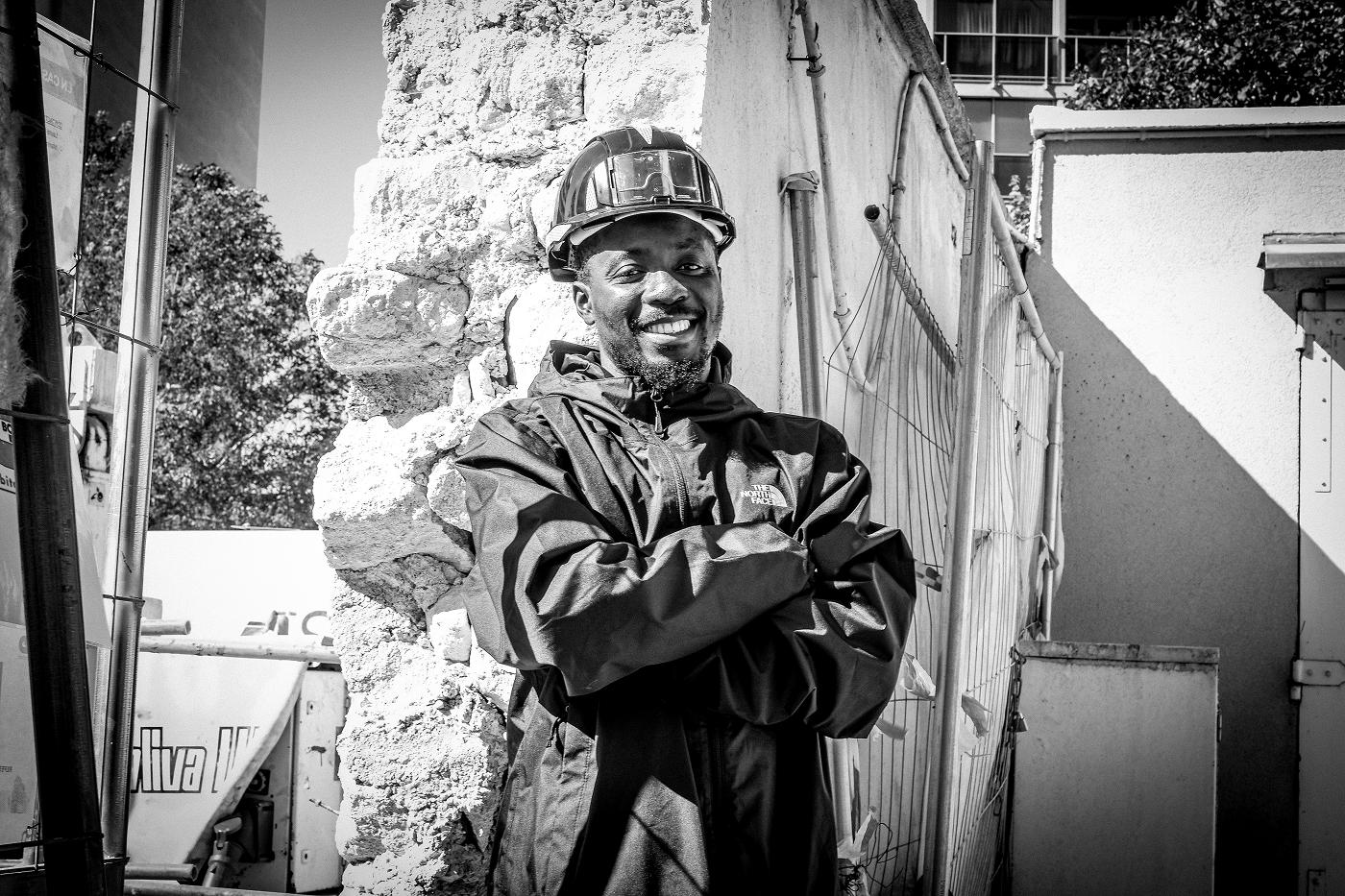
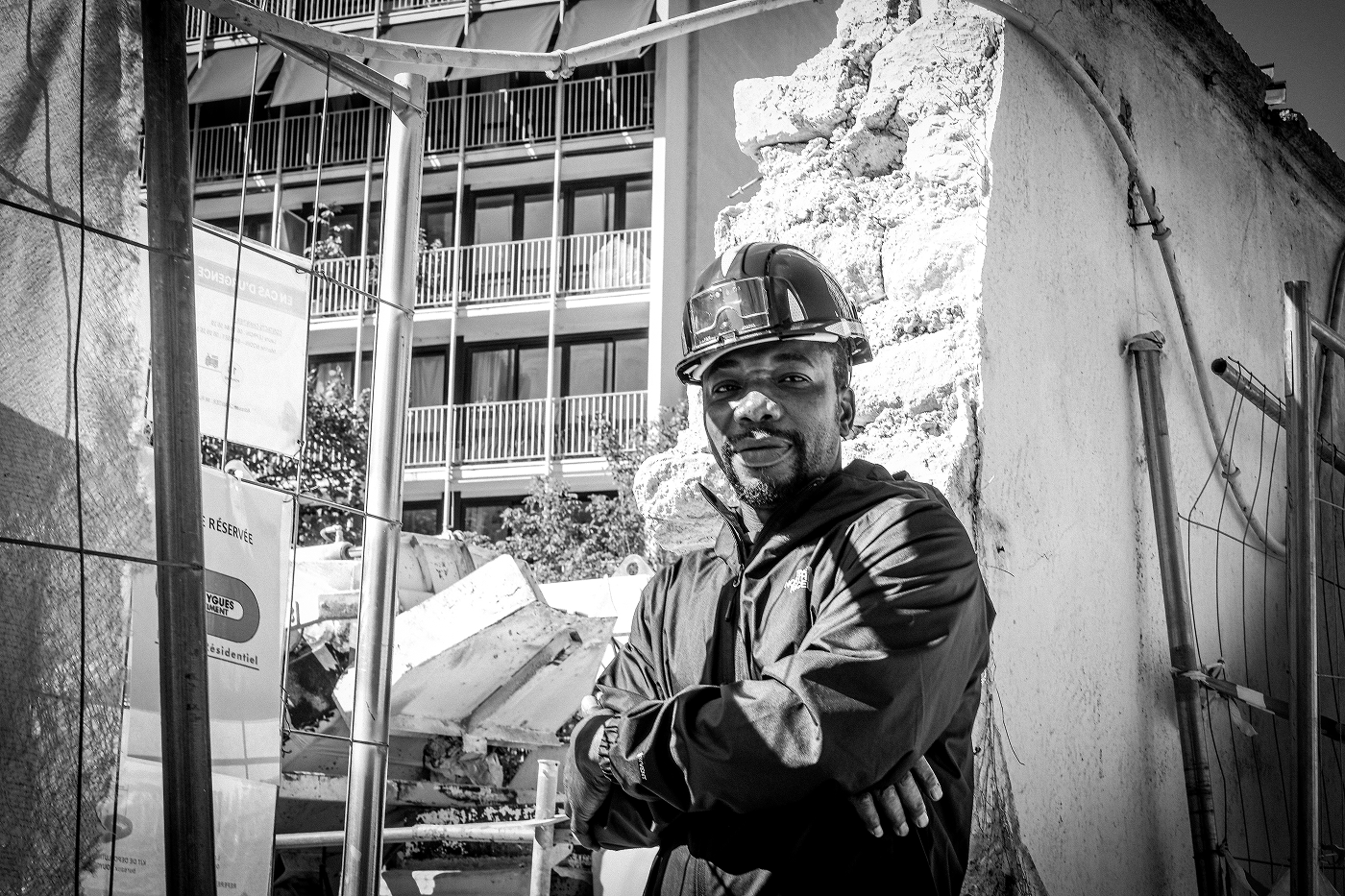
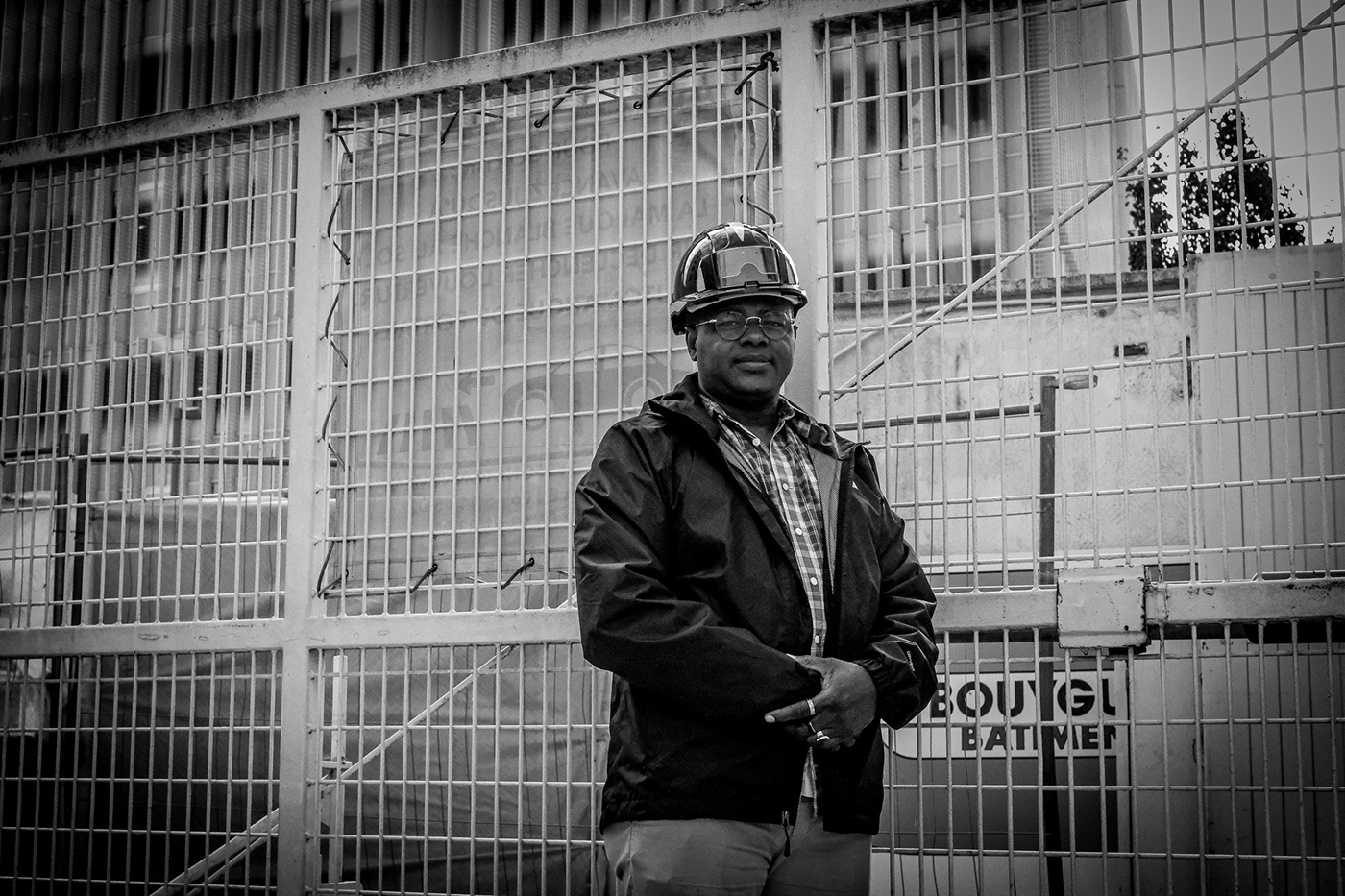
Djelal Carpenter
Chez asap.work depuis
November 2023
Between transmission and ancestral know-how, Djelal has made carpentry a new start.
When Notre Dame burned down, any carpenter would have wanted to be there.
Between transmission, retraining and exceptional projects, Djelal tells how carpentry became more than a profession: it was obvious.
Trained for the first time in wood trades at junior high school, Djelal then moved away from the building to devote more than fifteen years to education. Over time, the desire to return to a concrete job resurfaced. He is then trained in the framework and regains an ancestral, demanding and meaningful know-how. Seventeen years later, he worked on extraordinary projects such as the Olympic Village or the reconstruction of Notre-Dame de Paris, with the same pride: building what protects and what lasts.
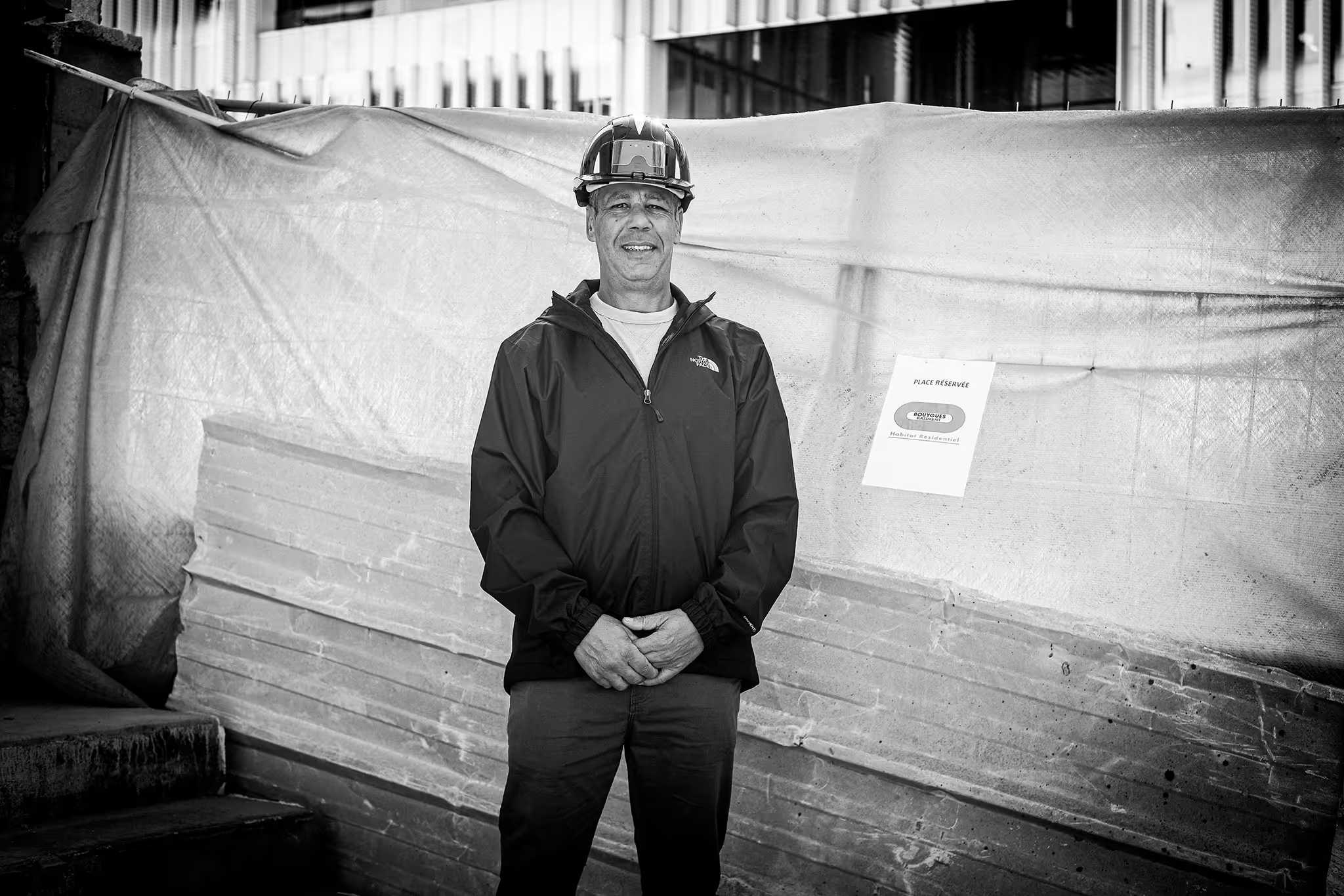
At Notre Dame, we realize what the ancients knew how to do.

His look at theFuture of the profession and the place of young people in the sector

Sa pride to work on projects that shape the daily lives of Ile-de-France residents

Les technical challenges which he was confronted with.
In this interview, Djelal Looks back on:
- Son Atypical career, between a long experience in education and a return to construction
- Sa Selected reconversion, Guided by the Desire to Find a Concrete and Meaningful Profession
- His experiences on Exceptional Projects Such as the Olympic Village and the reconstruction of Notre-Dame de Paris
- His vision of the Carpentry as an ancestral profession, Where Every Gesture Takes Place to Protect and Make It Last
Beyond his career, Djelal shares a sincere word about the value of the profession and the know-how transmitted:
“When you install a frame, you make a house safe.”
Through this testimony, asap.work Continue to Highlight Those Who Build and to value careers made of choice, transmission and pride in a job well done.
Djelal, hello, thank you for taking the time to tell your story. What I would like, at first, is for us to talk a little bit about your childhood, where you come from, and then how you got there.
So I am originally from Algeria, from the city of Skikda more exactly. I arrived in France in the years 74, at the age of 7. Then, I grew up in France, more exactly in a village called Le Suquet
The Suquet? Where is that?
It is the old village of Cannes. I grew up there until I was 24. I did all my schooling there. I trained as a carpenter in middle school, and then I stopped working in construction completely and went into education. I was an animator in a summer camp, summer camp..
Ok, you've hit the ground running with these initial experiences.
There you go. Then, I moved back to the Paris region in the 90s, to Montigny-lès-Cormeilles in Val-d'Oise. There, I trained as a sports educator. I worked with the town hall of Cergy-Saint-Christophe for more than 15 years. I specifically intervened in elementary schools to make them play sports, and I also took care of neighborhood youth.
And Did You Ever Tell Yourself That After That You Were Going to Become a Carpenter? Did it happen by chance?
Charpentier, it was really by chance. It's a job that I didn't know too much about. When I stopped doing education, I reworked a bit in the building. I was assembling cinder blocks on an expansion, and I saw carpenters arriving on the ground to do the roofing. It called to me. I said to myself, “What are they doing here?” I kept that in the back of my mind. And then, when education has “worn out” me a bit — because it wears out young people! — I decided to train as a carpenter in Nevers.
Where was the training?
In Nevers, where I got my CAP. I started working in business right away. The company I did my internships with promised me a job if I graduated. It was the Driolé company in Domont.
Do we have a permanent contract directly?
Directly on a permanent contract, yes. I worked with them for 4 years. We were doing structural work, private work. I discovered the job, the techniques, the apprenticeship... I really enjoyed it.
What is the job of Carpenter, if you had to explain it to a 12-year-old child?
We are at a height, of course, but it is the job that makes it possible to build the protection of the house. When you install a frame, a “farm” more exactly, you know that you are going to make the house safe. That is the base. After that, there are all the manufacturing and installation techniques.
I have the impression that the more you advance, the more the houses have flat roofs, with less exposed frames...
It's another technique, it's linked to standards. But a wooden frame is traditional, it is ancestral. It comes at a cost, that's why we see a lot of flat roofs today, it's more economical.
How long have you been a carpenter now?
Today it's been 17 years.
And what type of contract are you currently working under?
Currently, I work with the company asap.work, which is a temporary employment agency. Following a business closure, my last company filed for bankruptcy. I submitted my resume on the internet and I was contacted directly by Virginie, at asap.work. In fact, I thank her, because she did not let go of me!
Did you do any great projects with them?
My first mission was in the Olympic Village. It was ambitious, there were a lot of people on the construction sites, which sometimes hampered progress, but we got the work done on time. It was a real challenge.
And a second challenge in mind?
Notre Dame. When Notre Dame burned down, I think any carpenter would have wanted to be there. Thanks to asap.work, I had the opportunity of a mission there when the work started. I jumped at the chance.
You must have seen some amazing things there. Did you realize that there was ancient expertise that we may have lost a bit today?
Compared to our machines today, we really wonder how they did it back then! Especially for lifting, without a mechanical crane, just by force of your arms... and a bit of magic. When you properly inspect Notre Dame, you can see the attachment points for the scaffolding that served as lever arms. It was all built by hand.
A Last Iconic Project That You Are Proud of?
I think it really is Notre Dame. But I also worked on the Saint-Gervais church, just behind. We worked on the front doors, everything had to be partitioned because of lead paint.
And now, a little rest before going back on the field?
Yes, a bit of rest. Sincerely, working with asap.work, I have found a professional balance. I appreciate the availability and the responsiveness of the teams, especially Benjamin who is always there, even on the first day to bring back the croissants!
You have to! Thank you very much Djelal for this great journey, and I wish you many more great projects.
Thank you, I hope so too!