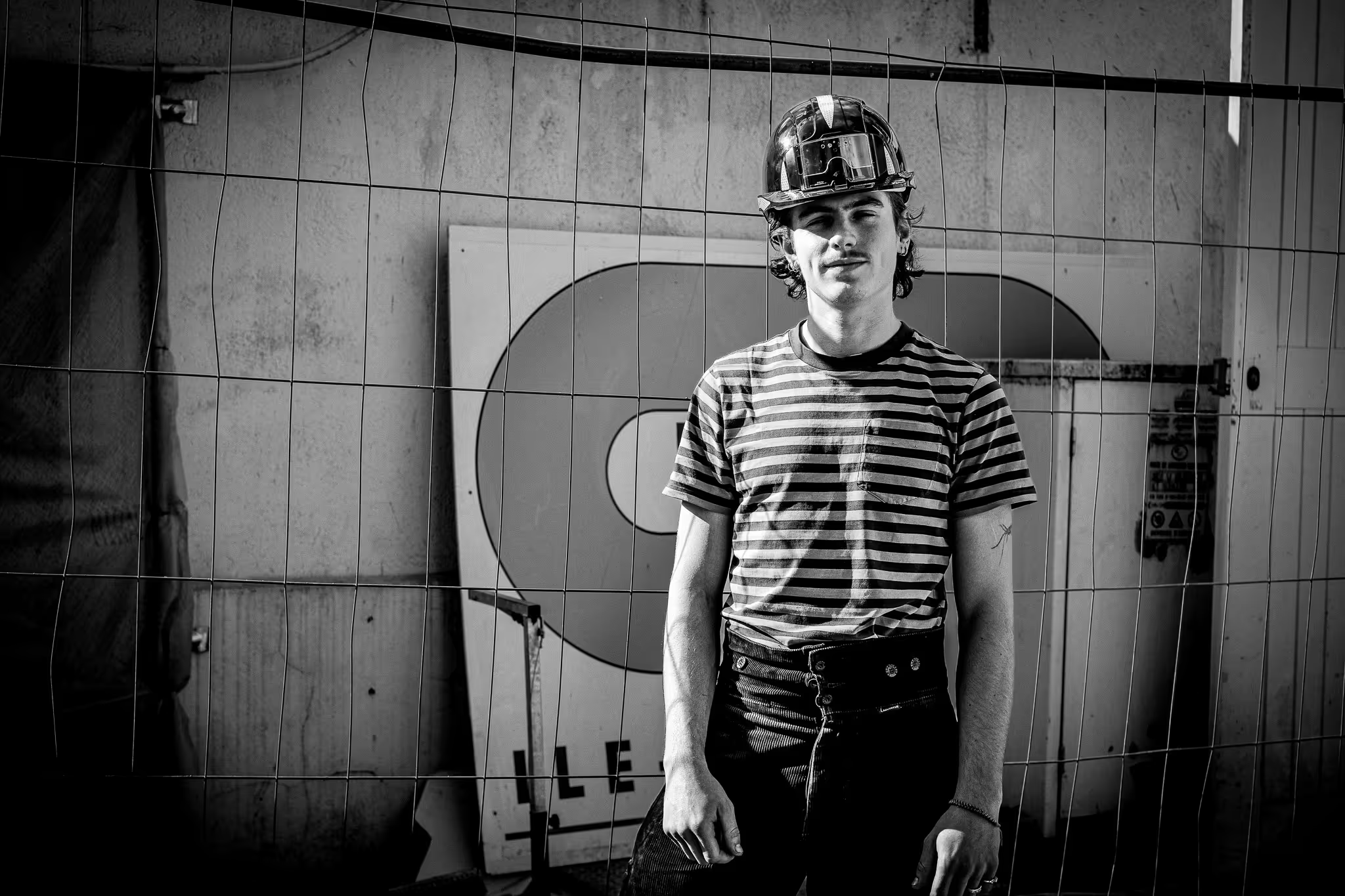
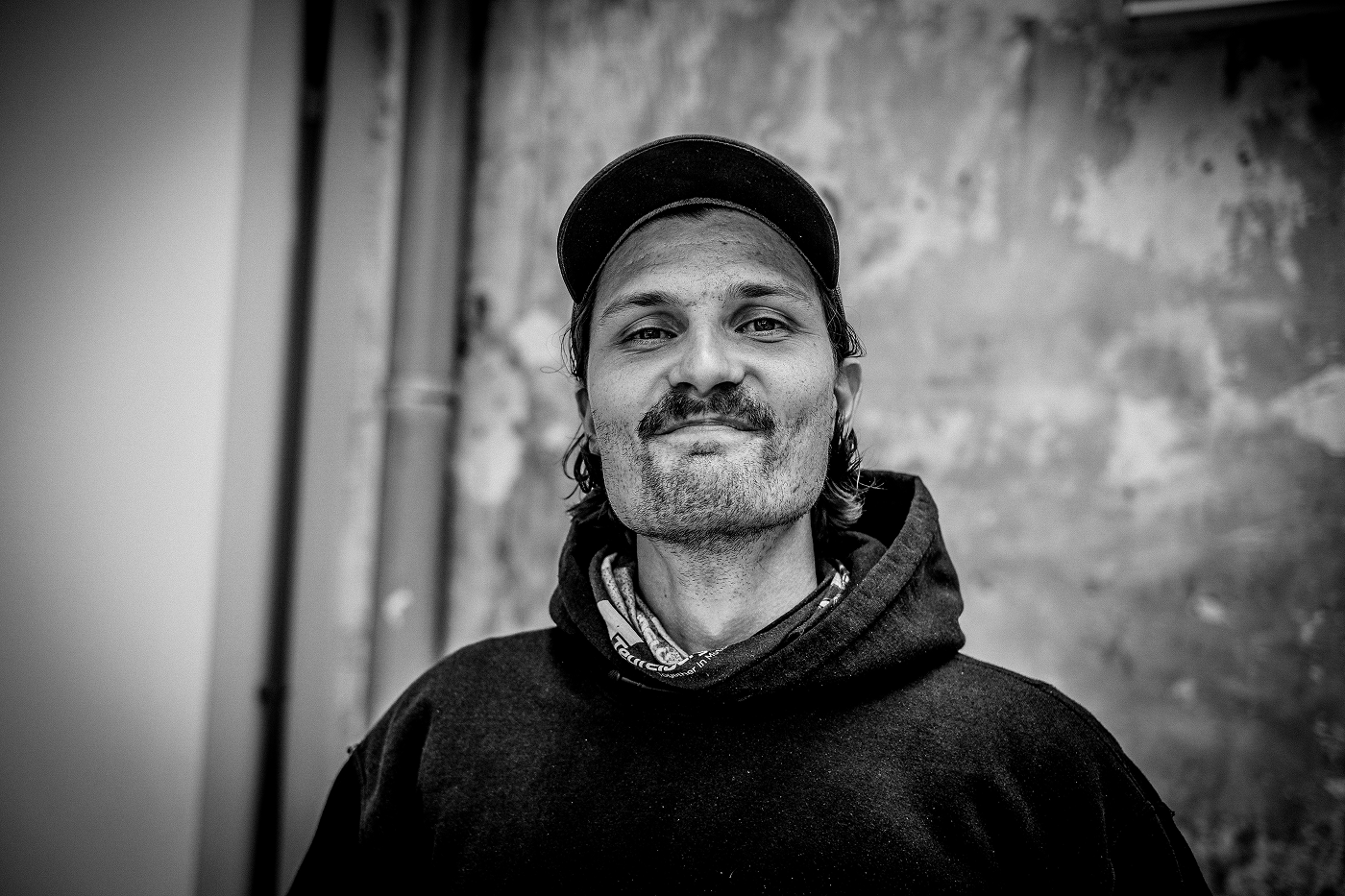
ZiedHVAC Technician
Chez asap.work depuis
April 2025
Between the call of the streets and mastering climate engineering, Zied built a solid future in construction, driven by a passion for his work and respect for experienced professionals.

When I do work for others, I always do it as if it were for myself.
Entering the construction industry to escape delinquency, Zied found much more than a livelihood: a true profession, daily pride, and absolute adherence to best practices.
Zied entered the construction industry in 2003, guided by a judge to steer clear of delinquency and build a future through work. Through an apprenticeship, he took his first steps on the major construction site of the RATP headquarters, alongside experienced professionals who taught him the ropes of the trade. Driven by a fierce sense of independence, he chose temporary work and experienced firsthand the technical evolution of his profession, transitioning from traditional copper soldering to the deployment of renewable energies. Today, an accomplished HVAC maintenance technician, he manages daily emergencies while strongly advocating for fair financial recognition of this vital profession for society. His greatest pride? Putting his heart into his work and working for others as if it were for his own home, all while reminding the new generation that one always grows by respecting the experience of those who came before.

If you're confident, don't let yourself be walked all over, but respect your elders: they know the trade better than you do.

His look at theFuture of the profession and the place of young people in the sector

Sa pride to work on projects that shape the daily lives of Ile-de-France residents

Les technical challenges which he was confronted with.
In this interview, Zied discusses:
- His beginnings in 2003 in the 95, when a judge guided him towards an apprenticeship in thermal engineering to steer him away from the pitfalls of the streets and offer him a future through work.
- His very first construction site at the RATP headquarters, a formative experience where he learned the basics of heating and air conditioning alongside experienced professionals who are now retired.
- The major technological evolution of his profession, transitioning from the traditional rigor of steel and copper soldering to the modern deployment of renewable energies and multi-layer piping.
- A memorable and unusual anecdote at Dior, where a simple temperature reading with a thermal gun caused a memorable misunderstanding right in the office.
Beyond his journey, Zied delivers a powerful message about the value of the payslip highlighting the vital role of skilled tradespeople, and reminds young people of the crucial importance of respecting the experience of elders on the job site.
Steve: Hello Zied.
Zied: Hello.
Steve: Thanks for taking the time today to share your story. You have 15 years of experience in construction: HVAC maintenance, thermal systems, electricity, plumbing. Today, I'd like to know where you come from, who you are, and what you do in the building industry.
Zied: Well, I'm Zied. I'm from the 95, I grew up in the suburbs. I've been in construction since 2003. I started with thermal installation, doing a vocational training certificate (CAP) with Tinsini, a Vinci subsidiary. I did my two years of apprenticeship, and then I started doing temp work. I did a lot of temp work in between, and had a few permanent jobs that I liked at first, but then didn't. So I stuck with temp work.
Steve: And did you originally think you'd go into construction?
Zied: I didn't think at all that I'd go into construction. I got into it because, well, I had to. I needed to find a way to get away from what was being suggested for our future... which was a bit of delinquency and all that.
Steve: OK. So it allowed you to learn a trade. Was it a bit by chance, actually?
Zied: Yeah... well, not by chance, because I really chose my apprenticeship and the trade I wanted to do. For me, heating and air conditioning seemed right. For a guy who wanted to work all year round, it was perfect: heating, air conditioning, hot, cold... there's always work. I thought: "I'm going for it.". And then over the years, the trade changed. All the renewable energies came along, solar panels... I went with the flow. I worked with solar panels, renewable energy, and a lot of medical fluids.
Steve: Do you remember your first job site?
Zied: My first job site was during my apprenticeship: the RATP headquarters in Val de Fontenay.
Steve: And that job site, did you see it from start to finish, or did you join partway through?
Zied: It was a job site we started from scratch. We began by decommissioning the old AHUs (Air Handling Units) and the old heating systems. Then, we managed the installation of new fan coil units. They were removing all the old heating installation and adding air conditioning and heating into the false ceilings and raised floors.
Steve: And when you get into this line of work, does a colleague or an experienced person teach you the ropes, or do you learn by yourself?
Zied: Well, you can't learn by yourself, and you learn something new every day. I got a lot of help during my apprenticeship because they were really the old-timers, you know. I arrived at the end of one cycle and the renewal of another. It was the beginning of renewable energy; solar panels were coming in at the same time. So I arrived just before the old system ended and right at the start of the new one. I learned both, it was a good transition.
Steve: That's really cool. And what did you want to do when you were younger? Were you already a bit hands-on?
Zied: I was already a bit hands-on. But the reason I ended up here and chose heating and AC is because the judge was starting to see a bit too much delinquency around us. She directed us towards apprenticeships. That allowed us to earn money while working and learning a trade. That's where I spent two years at Tinsini. There, I met professionals who told me their stories, where they came from, how they started. People who are all retired today.
Steve: And those people, did they teach you the trade right then and there?
Zied: They helped me a lot. Even if at the time I didn't necessarily execute everything they showed me, it stuck in my mind. I kept repeating it to myself. And at some point on the job, you're forced to use that knowledge because there's nothing else to do. After that, I also worked... I don't know if I should say it, but I worked with people from Eastern Europe.
Steve: You're allowed to say anything here!
Zied: Oh really? Well, I wasn't declared, I was working under the table. I was getting about 150 bucks a day. What I didn't understand was that they were declared, even though they came from there. And I wasn't. Maybe local labor is undervalued. So, you have to hustle around to sell yourself and land good jobs. Because sometimes, the reality of the job doesn't match what you expect. They tell you: "You're going to do this, you're going to do that". In the end, the guy sees you're working, but it's not the way he wanted you to work. The result is the same in essence, but not in form. That's all it takes for someone to treat you like a newbie who just started, even though you've done what they're asking a thousand times. I had to prove myself. Sometimes, I sold myself on things I didn't even know how to do. I'd say: "Yes, I know how to do it", and I managed to do it.
Steve: And in your family, are there people who come from the construction industry, or not at all?
Zied: Not at all. There's no one, just me.
Steve: And today, what's your daily life like, your workday?
Zied: Right now, I don't have a specific assignment, but usually, it depends on the demand. Lately, it's mostly been maintenance. Maintenance, for example, is: one day you have a leak or a hose that bursts in a fan coil unit. The next day, it's a clogged toilet or sink that needs fixing. It's all these small daily interventions that simply ensure the site's occupant is comfortable.
Steve: Is there a particular job or project that stood out to you during your 15 years?
Zied: Oh, there are so many! But the most recent one was a maintenance job at Dior with the company Réunion. They sent me to get a temperature reading in an office. I went in with my laser thermometer. I walked into the room, and in front of me were two women talking with their backs to me. The moment I raised the device to aim at the ceiling and take the temperature, they turned around, saw the tool pointed, and started screaming: "Terrorist!". I swear!
Steve: (Laughter) And is there a specific memory where you thought: "That's when I'm proud of what I do" ?
Zied: I'm always proud of what I do. Basically, I'm a guy who puts his heart into everything he undertakes. Whether I'm working for a boss, helping a friend, or lending a hand, I always do the job as if it were for myself. Even when I volunteer my time, I do it with the same high standards as if it were for my own home.
Steve: And what's the hardest part for you day-to-day? The physical demands, the mental strain, the weather, the hours?
Zied: Honestly, none of that. I've already mastered all of that with years of practice. The hardest part for me is the paycheck. We have a valuable trade. People think: "Well, he does heating, plumbing, it's a dirty job..." But if the tradesperson isn't there, you have no water, no heating, no AC. You don't have a quote and you don't know how to fix your systems. Just for calling us, getting information, or letting us detect a system anomaly, we are essential.
Steve: Do you think the trade has changed much since you started?
Zied: Oh yes, the trade has completely changed! As I was saying, when I started, it was all about steel and copper. Gradually, new materials arrived like multi-layer piping and sprinkler systems. Today, you show up with a crimping tool, an automatic electric clamp, and you crimp your elbows and tees in two seconds. Whereas before, we'd weld everything, and it was a real headache! Now, we crimp ultra-hard PVC. The equipment has evolved along with the trade.
Steve: Have you ever had a major disaster on a job site? A huge mistake or a crazy unexpected problem?
Zied: Actually, I've always made sure not to make mistakes, and I've spent a lot of time fixing other people's mistakes. That's from experience. Every time, I'd correct the defects, telling myself: "I have to be beyond reproach; I must not make any mistakes.".
Steve: To conclude, what word or piece of advice would you like to give to young people starting out or to your colleagues who want to get into construction?
Zied: Honestly, if you know what you're doing and you're confident: go for it wholeheartedly and don't let anyone walk all over you. But above all, respect the experienced ones. Even if something or a method seems illogical to you at first, respect their way of doing things. They're the ones with the experience; they know the trade better than you. You shouldn't look down on people. We learn something new every day.
Steve: Listen, thank you very much, Zied, for your time and for sharing your journey. I wish you much success for the future.
Zied: Thank you very much, and thank you too.
%20(1)%201.avif)