Retour aux articles

Conseils BTP et intérim

Becoming a Heat Pump Technician: all courses in 2026

In 2026, the PAC technician is essential to the deployment of low-carbon heating equipment.

Introduction

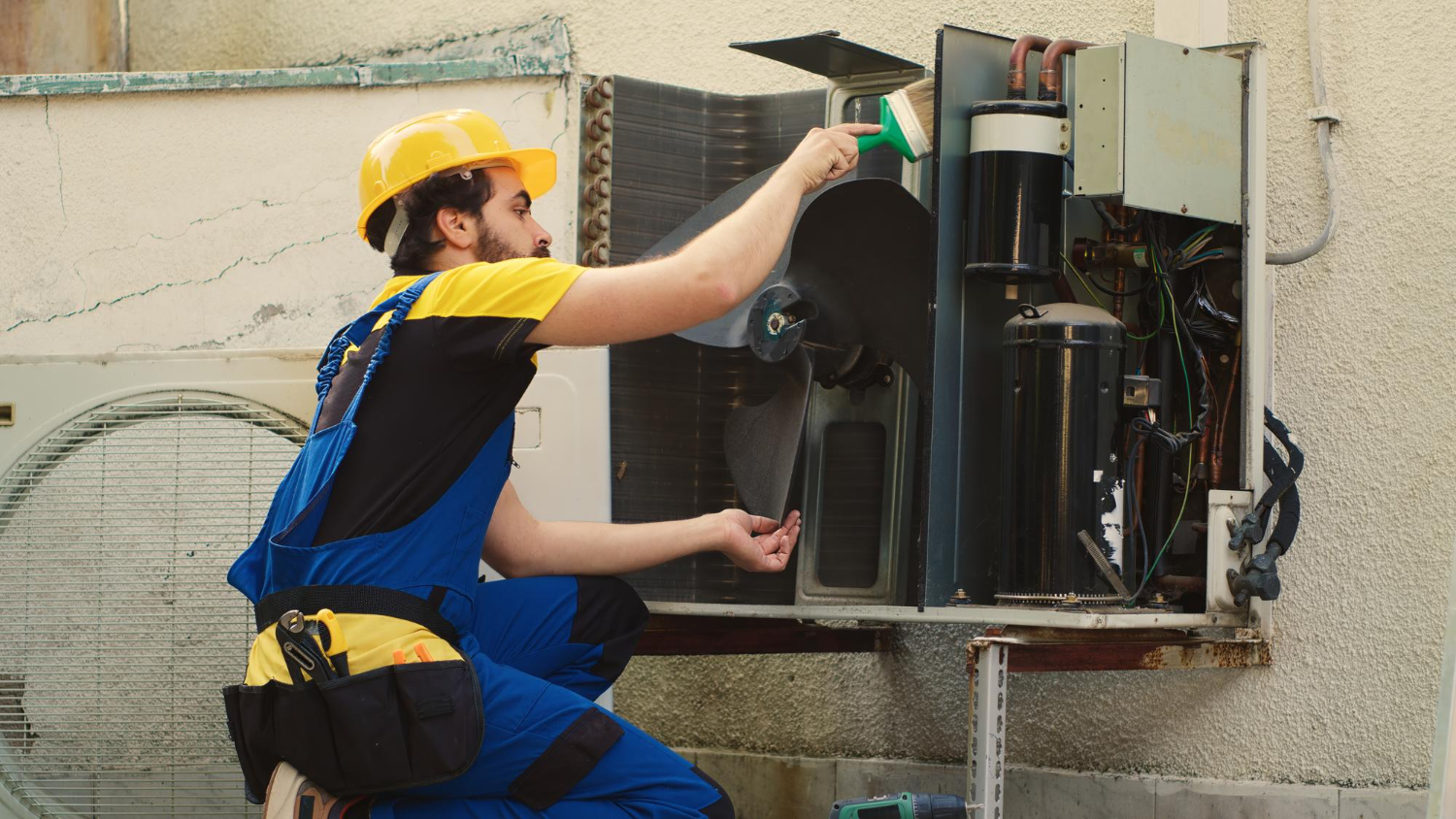
In 2026, the heat pump technician is central to the energy renovation of buildings. Installation, commissioning, maintenance: it works on complex thermal systems with high environmental value.

To practice, you need skills in electricity, refrigerants and hydraulics. CAP, Bac Pro, professional titles and refrigeration certifications allow access to the profession. This sheet details the missions, training, salaries and opportunities of the PAC technician.

Why train as a Heat Pump Technician?

In 2026, the heat pump technician is central to the energy renovation of buildings. Installation, commissioning, maintenance: it works on complex thermal systems with high environmental value.

To practice, you need skills in electricity, refrigerants and hydraulics. CAP, Bac Pro, professional titles and refrigeration certifications allow access to the profession. This sheet details the missions, training, salaries and opportunities of the PAC technician.

Nouveau call-to-action

What training courses should you follow to become a Heat Pump Technician?

The different types of training available

  1. TP Thermal Installer/Heat Pump Installer
  • Duration: 6 to 12 months
  • Audience: beginners, retraining, artisans wishing to specialize.
  • Objective: install, connect, configure and maintain air/water, air/air heat pumps.
  • Where? AFPA, GRETA, centers specialized in climate engineering.
  1. Bac Pro TMSEC or Bac Pro Energetic
  • Duration: 3 years
  • Audience: young people who want to work in heating and air conditioning.
  • Advantage: excellent base in thermal, hydraulic, electrical.
  • Where? CFA, vocational high schools.
  1. BTS FED — HVAC option
  • Duration: 2 years.
  • Audience: post-bac aiming at advanced technical missions.
  • Advantage: preparation for diagnostics, complex commissioning and dimensioning.
  • Where? CFA, technical high schools, higher schools.
  1. RGE QualiPAC (essential)
  • Duration: 3 to 5 days.
  • Audience: technicians wishing to officially intervene on PAC installations.
  • Advantage: allows the company to be certified for financial aid (MaPrimeRénov, CEE).
  • Where? Authorized Qualit'Enr organizations.
  1. VAE/Continuing education
  • Audience: heating engineers, air conditioners, multi-service technicians.
  • Objective: obtain a PAC certification or promote field experience.
  • Ideal for: increase your skills without going back to a long training course.

Comparison of Heat Pump Technician training

Formation Durée Public cible Avantages Prix
TP Installateur PAC 6–12 mois Débutants, reconversion Pratique + installation complète CPF / OPCO
Bac Pro TMSEC 3 ans Post-3ᵉ Thermique & hydraulique solides Gratuit / financements publics
BTS FED 2 ans Post-bac Expertise + dimensionnement Financement possible
RGE QualiPAC 3–5 jours Techniciens en poste Indispensable pour interventions PAC Entreprise / OPCO
VAE / Continue Flexible Professionnels expérimentés Reconnaissance officielle CPF / OPCO

💡 Coup d’œil Asap.work

Pour entrer rapidement dans le métier, combine un TP Installateur PAC + certification QualiPAC : c’est le duo indispensable recherché par toutes les entreprises.

Tu as déjà une expérience en chauffage ou climatisation ? La VAE peut valider ton niveau et t'ouvrir des missions de mise en service.

How does a Heat Pump Technician training take place?

Skills taught in training

By training yourself as a Heat Pump Technician, you learn how to install, maintain and troubleshoot thermal equipment essential to the energy transition. A technical, versatile and in high demand job.

🧰 Installation and commissioning of PACs

  • Installation and connection of indoor and outdoor units.
  • Construction of refrigeration, hydraulic and electrical connections.
  • Parameterization, adjustments and commissioning of systems.
  • Performance control and optimization of yields.

❄️ Refrigeration techniques & climate engineering

  • Notions of thermodynamics and the refrigeration cycle.
  • Control of refrigerants and their impacts.
  • Diagnosis of faults: pressure losses, leaks, electrical anomalies.
  • Preventive and curative maintenance of air/air, air/water, geothermal heat pumps.

⚡ Safety & regulations

  • Installation standards (NF, RT/RE2020, electrical safety regulations).
  • Environmental rules related to refrigerants.
  • Soldering procedures, vacuum drawing, tightness testing.
  • Safe handling of tools and equipment under pressure.

🛠️ Professional situation

  • Interventions for individuals and professionals.
  • Resolution of faults in real conditions.
  • Reading electrical and refrigeration diagrams.
  • Practical work in the workshop + alternating field missions.

Access conditions

  • CAP/BEP thermal or Bac Pro Energetic to access the first installations.
  • Bac Pro TISEC/TMSEC/MEE recommended to evolve quickly.
  • BTS FED option climate engineering to aim for more technical positions.
  • For a redevelopment : accelerated training + certificate of refrigerant suitability.

The steps to integrate a training

  • Parcoursup for CAP, Bac Pro or BTS oriented thermal/energy.
  • Specialized organizations (AFPA, GRETA, PAC centers): direct applications.
  • Adult retraining : financing via CPF, France Travail, Transition Pro.
  • Alternation : often the fastest way to integrate an HVAC installation company.

The opportunities and possible evolutions for a Heat Pump Technician

From installer technician to heating expert

Confirmed PAC technician: complex interventions, adjustments, advanced hydraulics.

PAC technical referent: support for field teams.

Project supervision and management

Heating team leader: coordination of several technicians.

Junior CVC Business Manager: sizing, quotation, customer follow-up.

Creation or resumption of activity

Independent PAC installer: installation + repair.

HVAC company: you hire and manage your own teams.

Bridges to other professions

Air conditioning technician: rise in multi-energy.

PAC trainer: for RGE certified organizations.

Conclusion

Becoming a heat pump technician means installing and maintaining key technology to reduce the energy impact of buildings. A precise, sought-after and promising profession. Do you want to accelerate your career? Asap.work can guide you to the ideal training or mission. 🔧🔥

Boost your career and warm up your future.

What is the salary of a PAC technician?

The salary of a heat pump technician starts around €2,000 gross/month, and can exceed €2,800 depending on the level of diagnosis and autonomy.

Can you become a PAC technician without a diploma?

Yes with a short PAC training, but the majority of recruiters require a CAP/Bac Pro thermal, cold or electricity to be operational.

What is the role of a PAC technician?

It installs, adjusts and repairs heat pumps, ensures commissioning and optimizes the efficiency of installations.

What are the working conditions of a PAC technician?

He works in housing, tertiary buildings or single-family homes, with daily trips, maintenance, technical and sometimes on-call interventions.

Nos ressources

Nos dernières ressources

Calcul du salaire pour 24h par semaine : guide pour les recruteurs du BTP

Bien comprendre le calcul du salaire pour 24h/semaine est indispensable pour proposer une rémunération juste et conforme à la loi.

Contrats et réglementations

SMIC Net 2026 : Tout savoir sur ton salaire et son évolution (Guide complet)

Tu viens de recevoir ta première paie de l’année ou tu cherches ta prochaine mission d’intérim et une question te brûle les lèvres : combien gagne-t-on vraiment en 2026 ?

Entreprise

Créer une offre d'emploi irrésistible : Le guide complet pour attirer les meilleurs talents BTP en 2026

Dans un marché du travail sous tension, où la pénurie de main-d'œuvre qualifiée dicte sa loi, votre capacité à recruter ne dépend plus seulement de la notoriété de votre enseigne. Elle dépend de votre vitrine immédiate : votre annonce.