Introduction
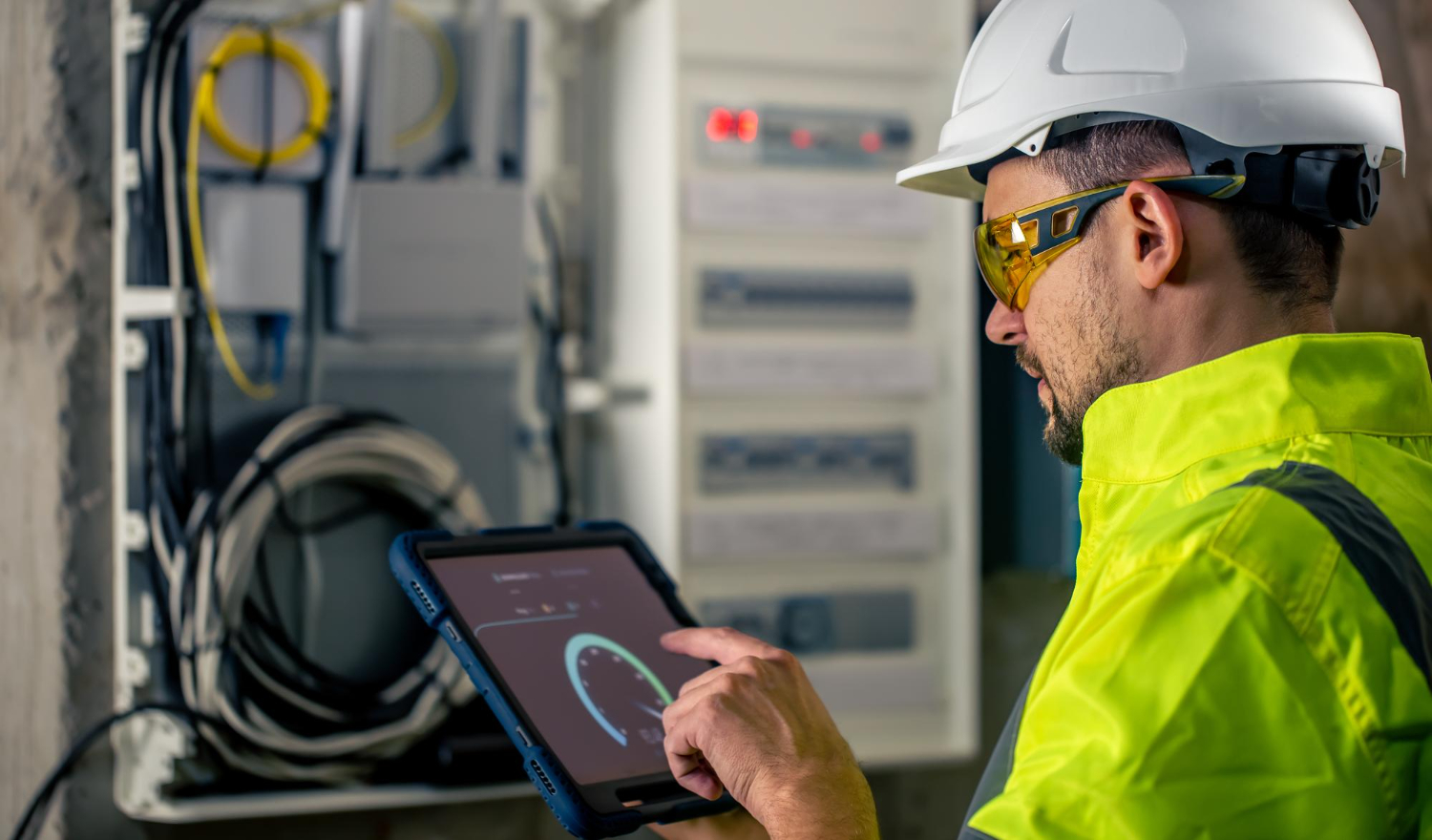
In 2026, the D1-D2 technician is at the heart of fiber deployment operations. It intervenes in the creation of networks, drawing, switching and connections in public areas. It is a technical, physical job, and crucial for the continuity of very high speed.
To carry out these missions, you need to know telecom infrastructures, security rules and operator procedures. BTS, professional qualifications or fiber optic training: several courses lead to this strategic role. This sheet details the missions, training, salaries and prospects for becoming a D1-D2 technician.
Why train as a D1—D2 Technician?
In 2026, the D1-D2 technician is at the heart of fiber deployment operations. It intervenes in the creation of networks, drawing, switching and connections in public areas. It is a technical, physical job, and crucial for the continuity of very high speed.
To carry out these missions, you need to know telecom infrastructures, security rules and operator procedures. BTS, professional qualifications or fiber optic training: several courses lead to this strategic role. This sheet details the missions, training, salaries and prospects for becoming a D1-D2 technician.
How does a D1—D2 Technician training take place?
Skills taught in training
By following a D1—D2 Technician training, you will learn to work on fiber optic infrastructures at an early stage: installation, drawing, connection and network control. This is the core of THD deployment.
🚧 Deployment work and infrastructure
- Cable pulling in the air, facade or underground.
- Installation and preparation of boxes, chambers, sleeves and PM/PMZ.
- Installation of garters and optical paths.
- Reading network plans and using GIS/operator tools.
🔧 Optical connection and soldering
- Perform fiber welds (using arc-fusion welder).
- Ensure the organization and cleanliness of optical boxes.
- Perform splices in D1 and D2 according to operator standards.
- Guarantee the conformity of the fibers laid for future D3 operation.
📡 Advanced measurements and quality control
- Use the OTDR to locate faults, cuts, or weakening.
- Analyze reflectometry curves.
- Check the quality of the network before production.
- Write recipe reports and intervention files.
🛠️ Professional situation
- Field interventions in pairs or teams.
- Work in a nacelle, scabbards, telecom chambers.
- Strict compliance with network security rules (FO, electrical, roads).
- Alternating possible to learn directly on site.
Access conditions
- CAP/BEP level accepted in construction, electricity or networks.
- Professional title Fiber Optic Technician highly recommended.
- BS/BE electrical certification useful depending on the construction site.
- La VAE allows you to obtain certification after 1 year of experience.
The steps to integrate a training
- Specialized fiber centers (AFPA, INHNI, GRETA) : direct registrations.
- Short operator training courses : Orange, Axione, SFR under conditions.
- CPF : 100% fundable training courses for adults in retraining.
- Alternation: integration into deployment companies (Circet, SPIE, Constructel...).
Opportunities and possible evolutions for a D1—D2 Technician
From network deployment to site supervision
✅ Confirmed D1/D2 technician: support for more complex areas, GC, aerial, long draw.
✅ Network technical referent: You become the point of support for the D1/D2 and D3 teams.
FTTH project management
FTTH team leader: management of drawing teams, connections and measurements.
Fiber site manager: management of production areas and BE relationship.
Creation or resumption of activity
GC/Fibre company: you become a subcontractor for deployments.
Telecom multi-service provider: GC + fiber + maintenance.
Bridges to other professions
Expert optical measurer: OTDR/PM specialization.
Deployment Business Manager: You go to the office to manage several projects.
Conclusion
Becoming a D1—D2 technician means participating directly in the deployment of fiber in the country. You ensure the construction and reliability of infrastructures that connect millions of users. Do you want to go further? Asap.work can help you find the next mission that will strengthen your expertise. 🔧📶
✨ Build the networks of today... and your career of tomorrow.
What is the salary for a D1—D2 technician?
A D1—D2 technician earns between 2,000 and 2,600 euros gross/month, with higher salaries in high-demand areas.
Can you become a D1—D2 technician without a diploma?
Possible, but rare: companies generally require a CAP/Bac Pro electricity/networks or fiber training, because D1—D2 involves civil engineering and strict rules.
What is the role of a D1—D2 technician?
The D1—D2 technician deploys and maintains fiber infrastructures (GC, draft, aerial), prepares networks and guarantees their optical continuity.
What are the working conditions of a D1—D2 technician?
It operates outdoors as well as indoors, often at heights or in the basement, with load carrying, cable pulling and frequent trips to various sites.